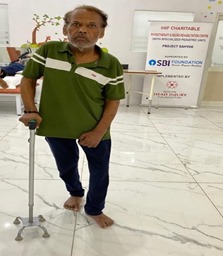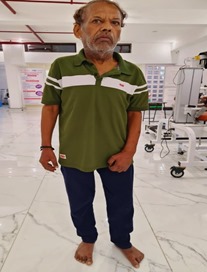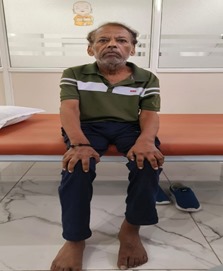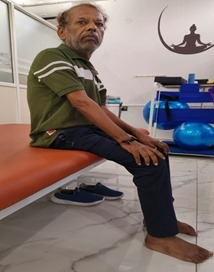
A 67-year-old male patient suffered a stroke resulting in left-sided hemiparesis on December 20, 2022. He was presented for treatment at the IHIF Centre on July 7, 2023, with weakness on the left side of his body and dependence on caregiver for daily tasks. He also experienced poor balance and muscle spasticity in both lower limbs.
ON EXAMINATION, the patient demonstrated a hemiplegic gait, and his balance was severely impaired due to extreme muscle weakness. The Straight Leg Raise (SLR) was limited to 20 degrees, knee flexion to 80 degrees, knee extension to 20 degrees, left leg abduction to 30 degrees, and knee jerk and ankle jerk were graded as 3++ and 3+, respectively. Spasticity was observed in both lower limbs, with a pain rating of 3/10 at both knees. OT- he is not able to lift his hand, disused atrophy was there, hand muscles was spastic, patient is not able to hold objects, difficulty in elbow flexion was there
Outcome measures: ASIA Motor score : 67, sensory score 104, ASIA Score B, VAS 3/10, FIM 145, DASH 91/120
Post Rehab Outcome measures: ASIA Motor score :74, sensory score 104 , ASIA Score B , VAS 1 /10, FIM 177 , DASH 93 /120
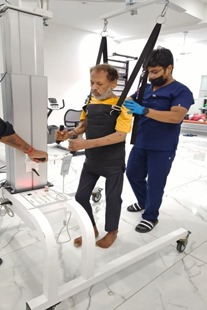
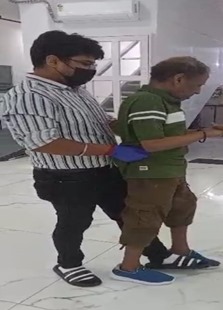
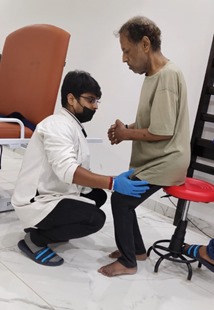
The Rehabilitation Program aimed, to improve the patient’s mobility and independence. Various therapeutic approaches were employed, including balance training, Neuro Development Treatment (NDT) techniques, Rood’s approach, gait training, bilateral lower limb strengthening, and Functional Electrical Stimulation (FES) to target specific muscle groups. The ongoing therapy included lower limb stretching, core strengthening, upper limb stretching exercises, hand muscle exercises FES for left arm elbow flexion, finger extension, and left foot dorsiflexion, functional activities training, balancing exercises, and lower limb strengthening exercises.
Follow Up On 25 Session: Individualized rehabilitation protocols tailored to the patient’s specific needs play a crucial role in optimizing outcomes for post-stroke rehabilitation. The patient experienced improved mobility, balance, and functional independence, as demonstrated by his ability to stand independently, walk without a walking stick, sit without support, and able to perform activity of daily living (ADL), able to hold objects, shoulder ROM is increasing, improvement in Daily routine task. He is still undergoing rehab sessions.