A 38 years old male presented with complete spinal cord injury to the Centre. Chief complaint of bilateral lower limbs, motor & sensory loss with no urinary & bladder control. Unable to perform Activity of Daily Living. History of polytrauma with fracture of Rt. tibia, Rt radius fracture, Lt clavicular fracture and DV12 with paraplegia. Post traumatic raw area calf region on right side.
On examination: – Babinski sign no response, DTR Biceps 2++, Triceps 2 ++, ankle jerk no response, knee jerk no response, muscle tone of B/L lower limb hypo. Right side scar present in inner thigh region. Bed sore in Sacral region.
Outcome majors– ASIA grade A, U/L Motor 50/50, L/L motor 0/50, light touch 68, pin prick 70, FIM FAM 144, MMSC 29/30, B/L hip flexors MMT 0/5, Hip extensors MMT 0/5
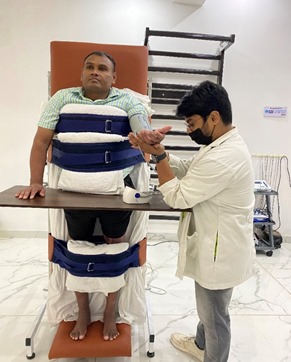
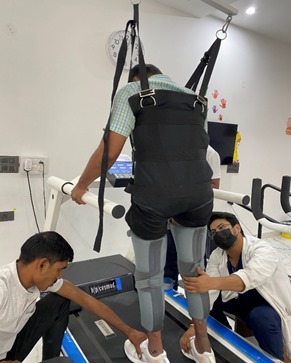
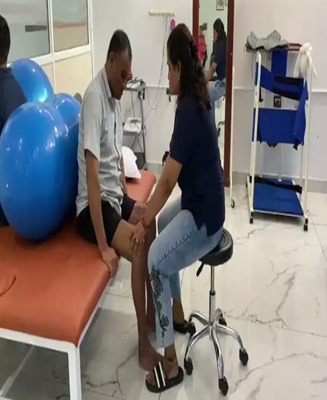
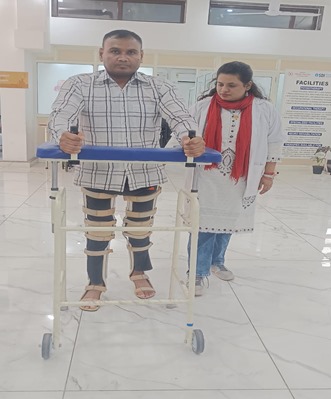
After Regular Physiotherapy, significant improvement in core stability achieved. He is able to sit & stand independently with KFO, right side impaired sensation achieved, mild bladder and bowel sensations has been restored. Treatment includes Lower limb passive ROM (range of motion) followed by active assisted ROM exercises performed in functional positions, lower limb PNF (Proprioceptive neuromuscular facilitation) is performed. Bed sores were regularly examined. Robotics for lower limb functional activities were performed. Initially supported walking on harness in hydraulic gait walker, then on treadmill with harness, then Gait training in parallel bar with KFO, now walking with gutter walker with KFO. Balance & coordination activities were taught, for pelvic floor muscle- Kegel exercises were performed. Regular psychological counselling is in process to motivate and boost up his spirit.
Outcome majors– ASIA grade B, U/L Motor 50/50, L/L motor 8/50, light touch 82, pin prick 90, FIM FAM 152, MMSC 30/30, B/L hip flexors MMT 2/5, Hip extensors MMT 1/5
RESULTS:
The rehabilitation program aimed to improve the patient’s mobility and independence. Over the course of 55 sessions, he gained independent sitting and standing with KFO, mild bowel and bladder control archived. As a result, the patient was able to perform some functional activities in sitting position.